Frequently Asked Questions About Tiny Homes for the Homeless
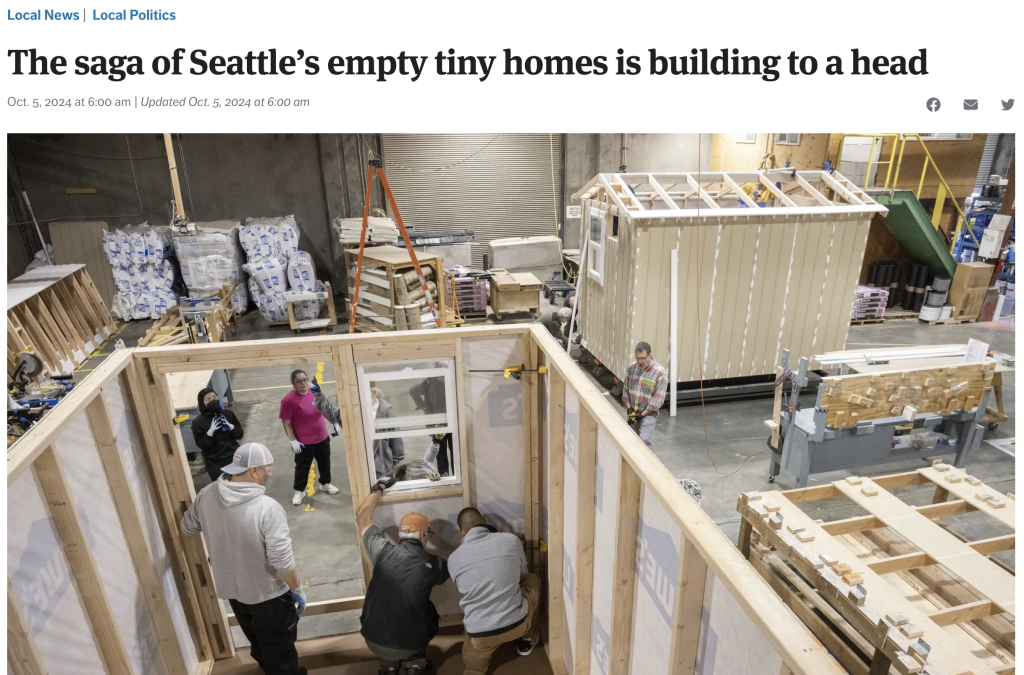
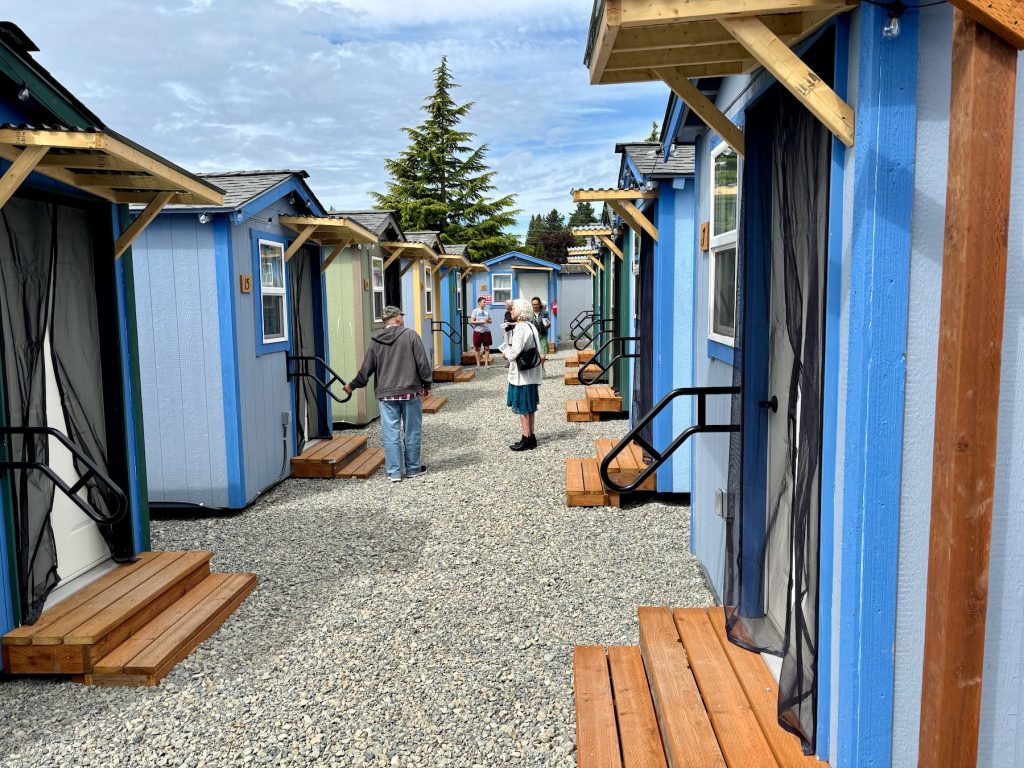
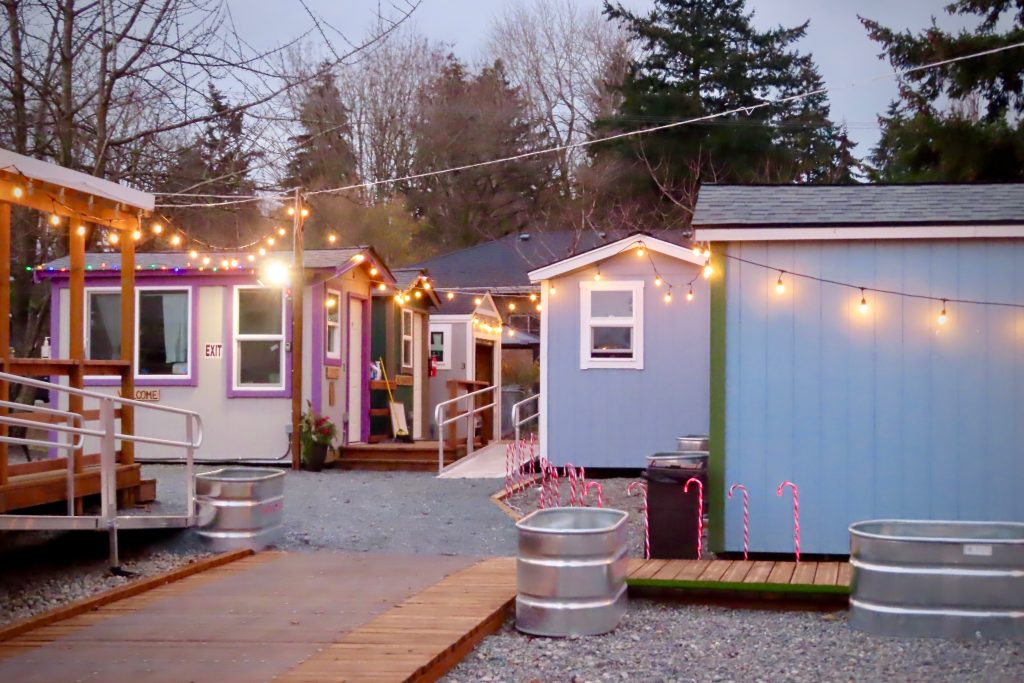
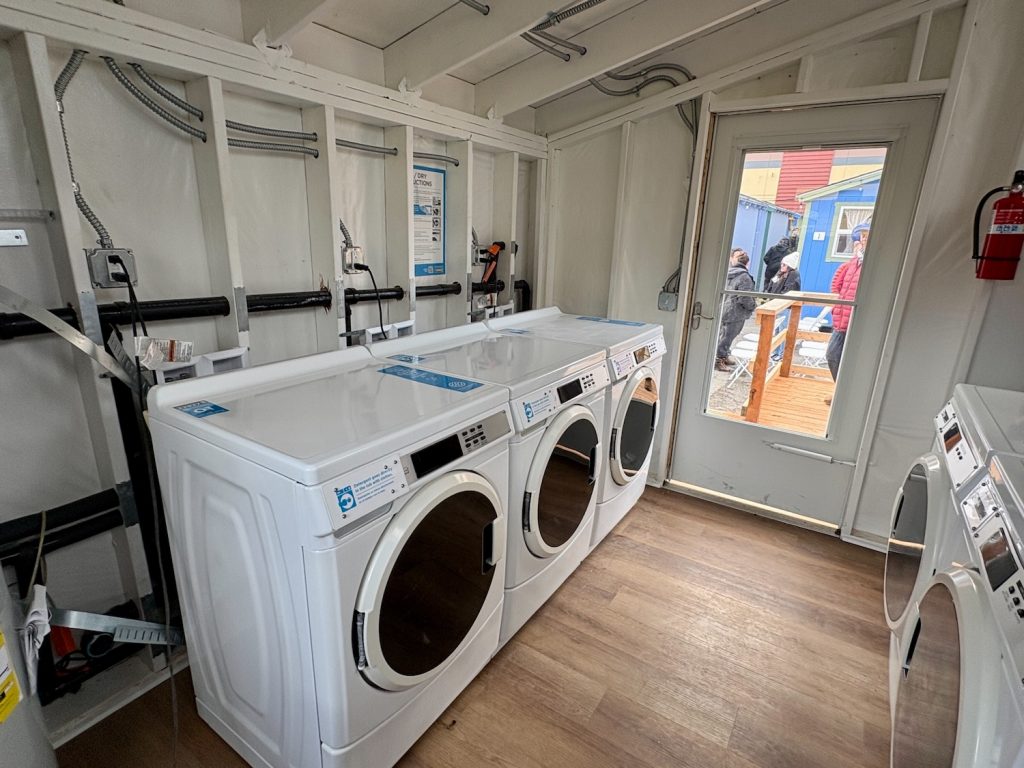
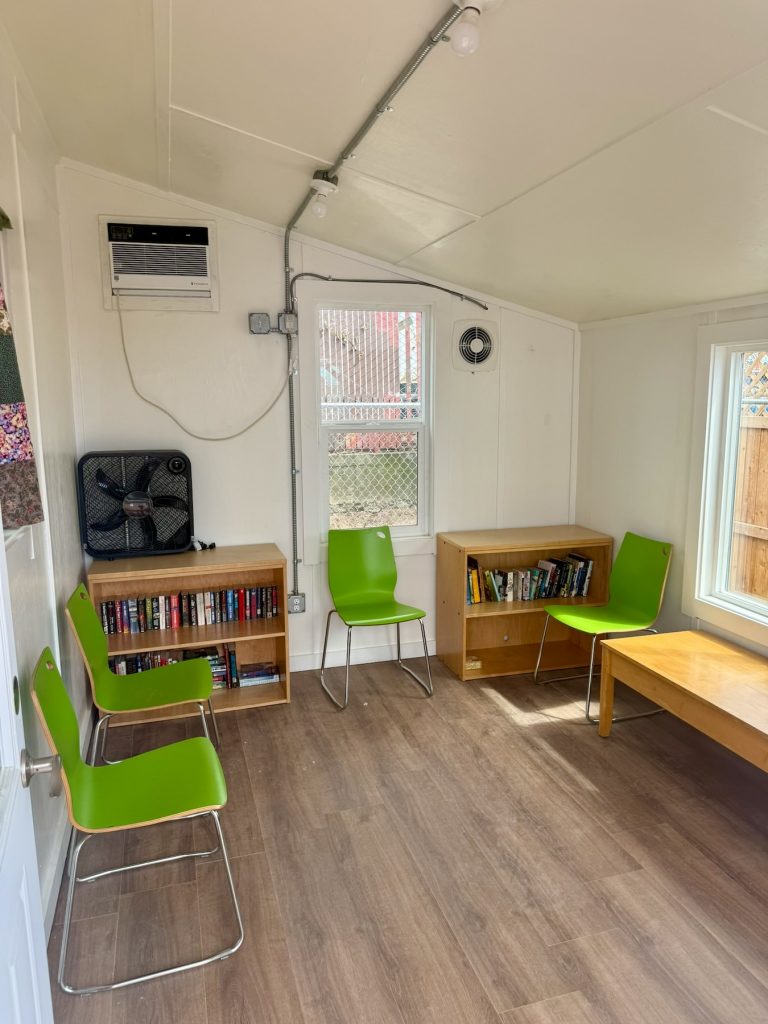
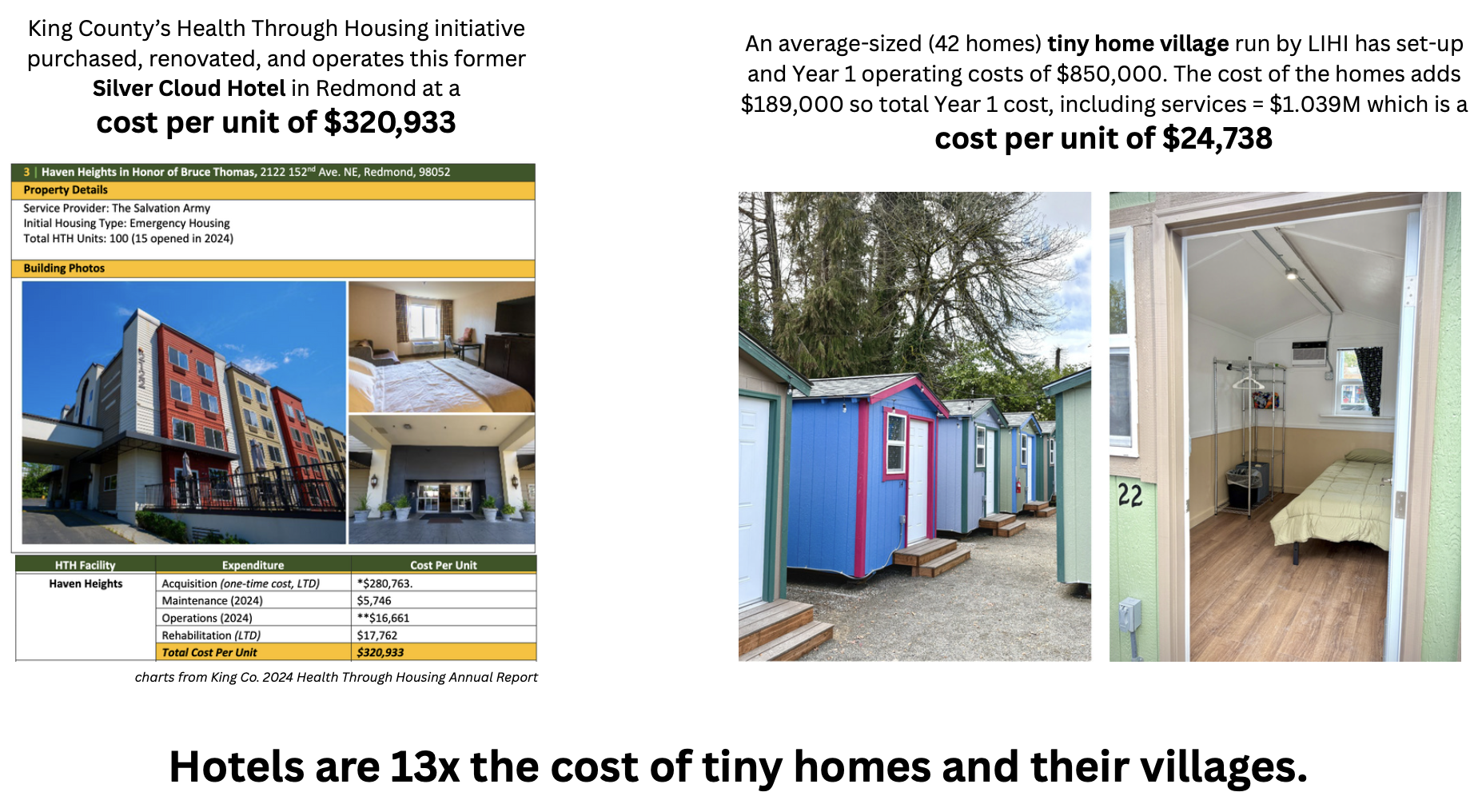
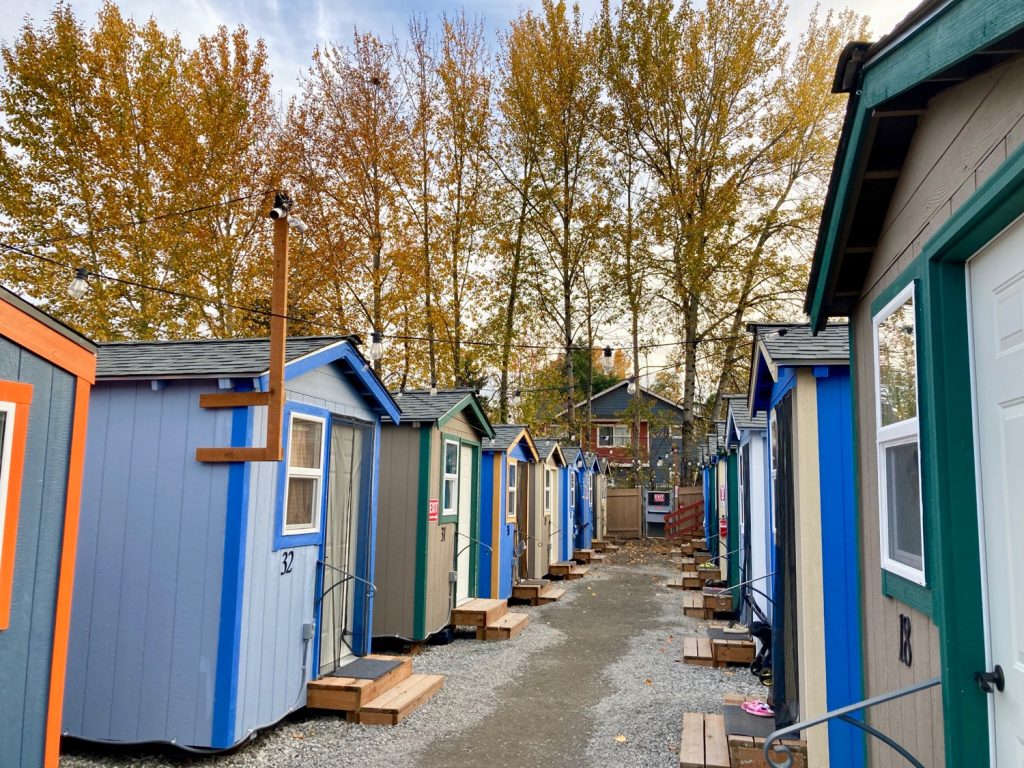
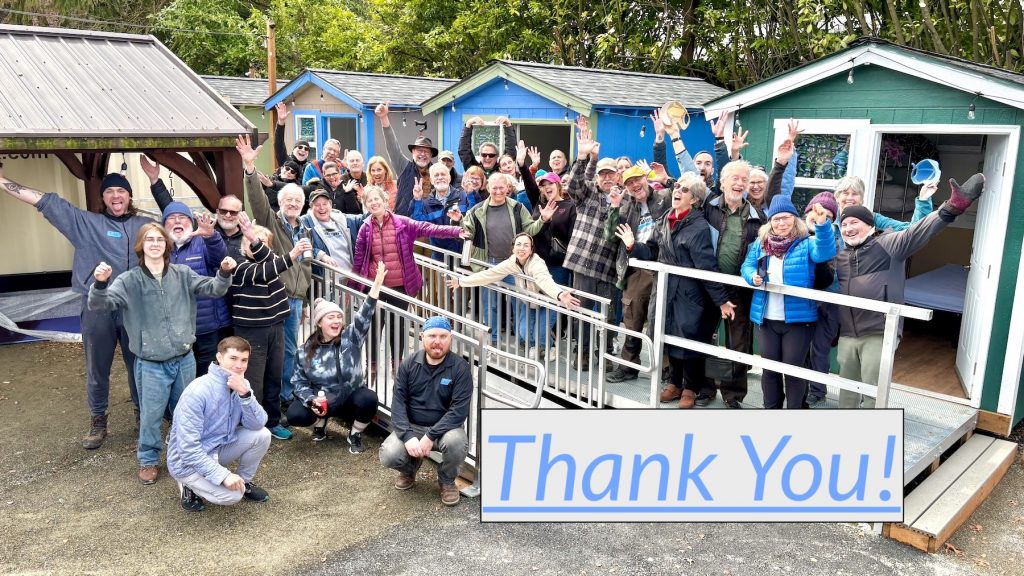
Since most of the tiny home villages in our area are run by the Low Income Housing Institute (LIHI), and most of the tiny homes in LIHI’s villages are built by Sound Foundations NW, we rely on the annual data they produce regarding outcomes for their tiny home villages to evaluate our homes’ performance. In 2025, LIHI-run tiny home villages had a 90% occupancy rate, and it wasn’t higher only due primarily to unoccupied nights as residents turned over, or as a village was being wound down to prepare for a move. Regardless, 90% just beats the 86% utilization rate for all emergency shelters system-wide in 2025, as measured by the KCRHA. Also, the city of Seattle’s Unified Care Team (the outreach folks at Seattle’s Human Services Dept.) produced a report for Q3, 2023 (see pg. 6) that detailed reasons why folks in encampments declined an offer of shelter, even when their encampment was being swept. The number one reason, cited 23% of the time? “Wants a tiny house.” Data like this implies that tiny homes are the most desired form of non-congregate shelter. In 2025 55% of LIHI tiny home village residents who left the village, moved into housing — either a permanent home like an apartment, or a specialized housing situation like an assisted living facility, adult family home, or nursing home. According to the city’s One Seattle Homelessness Action Plan website, 39% of all folks in shelters in Seattle moved to permanent housing in 2024, and 34% of those nationwide did so. So the services that residents receive while living in a tiny home village are helping them move out to housing at a higher rate compared to all shelter types – and helping them stay there. Tiny homes and villages don’t just move folks off the streets, they help them end the cycle of homelessness for good AND in doing so, they help stop the sweeping of encampments from one neighborhood to another that does nothing to solve the problem and costs millions of dollars per year. We build each of our tiny homes with all-volunteer labor and just $4500 worth of construction materials. Once the cost of village infrastructure is added, including hygiene trailers, community kitchen, laundry building, staffing, and security, the cost per tiny home to build it, install it, and have the village ready for move-in is roughly $28,000 per home depending on the size of the village and how many homes the infrastructure cost is being shared across. Nevertheless, the cost to build an apartment building in Seattle typically ran $300k-$400k per unit during 2024-25. And another popular option, buying unused hotels for housing (as with King County’s Health Through Housing Initiative), reported acquisition costs of $148k to $363k per unit (see pg. 54). Tiny homes and their villages are certainly a bargain comparatively. Social media posts by the local Seattle “action-based, boots-on-the-ground movement,” We Heart Seattle, falsely imply that tiny home villages are merely taxpayer-funded drug dens. For instance, in the video the interviewer says, “do you know that the tiny house villages [our emphasis] have a dedicated tiny home, built by volunteers, to be used as a fentanyl smoking shack. . . ?” This is untrue. While this particular village does seem to have one, “tiny house villages”, plural, implies every one of them does, which is not true. Nearly all tiny home villages in the Seattle area are clean and sober but a few are not. This is what’s known as the “low-barrier” approach to shelter – get people inside and off the streets, without requiring them to be clean first, then try to convince them to accept offered MAT – medically assisted treatment. Delivering methadone or buprenorphrine to folks who have a fixed location, or offering the new long-acting buprenorphine treatment, is a lot more successful than asking them to get to a mobile van or clinic every day or once a week – or demanding they go “cold turkey”. This is a basic and long-standing debate about abstinence vs. harm reduction strategies for drug use and how to treat it. This has Nothing. Zero. to do with tiny homes and villages but this organization seems to have an opinion about them and is using behavior they KNOW will outrage viewers and attaching it to tiny homes in general to discredit them. The volunteers that give their time with this group to clean up trash and restore public spaces to usable conditions deserve all credit and thanks for pitching in. Their documented efforts are impressive. But broad generalizations about ALL tiny home villages, ALL shelters, or ALL homeless people only hurt efforts to move people off the street – which should be a goal we can all agree on, right? For more information on addiction and mental health issues among the homeless population, see this article on AmericanAddictionCenters.org or this September, 2025 research from the non-partisan, health-policy research group, KFF . Take a short video tour of a brand new tiny home village on our YouTube channel. An October 5, 2024 column in The Seattle Times by Danny Westneat, “The saga of Seattle’s empty tiny homes is building to a head” highlighted the absurdity of more than 200 of our tiny homes sitting in storage, unused, while more than 9800 of our homeless neighbors sleep in tents, encampments, and rv’s. To cap it off, the writer included the incident of a homeless woman breaking into one of our homes in our back storage area, locking herself inside, and sleeping in there for two nights. So yes, in the Fall of 2024, with the numbers of our fellow Seattleites who are homeless increasing every year, we had over 200 finished tiny homes in storage, waiting to shelter a neighbor who was otherwise on the streets and help them along the way to permanent housing. Bureaucracy can be maddening. But things have dramatically improved . . . keep scrolling! After just one village opening in 2023-24, there have been three openings in 2025 (Eagle Village 2.0 in March, Rosie’s Village 2.0 and Kingfisher Village both in July) and at least two more villages are announced for Seattle as of August. As we predicted last Fall, village openings do not happen with regularity but rather tend to happen in waves. As village sites are ready we need to be able to provide typically between 40-65 homes all at once. Our past experience is that, sooner or later, bureaucracy unsticks and more villages are built – and we’re going to continue to be ready when that happens. Supporting any non-profit is a personal choice. We respect your decision no matter what it is. Most importantly, we celebrate your commitment to be a part of the solution in the past, present, and future with your donations, your time commitments, and your word-of-mouth sharing of the tiny home solution with family, friends, and colleagues. HOMELESSNESS IS SOLVABLE! Over the years, we have overcome many challenges and we seem to finally be moving beyond this one too. After an 18-month bottleneck deploying our tiny homes in the region, four villages opened in 2025, three in Seattle plus one in Tacoma. A fifth village opened this month in Tukwila, a sixth called Glassyard Commons was just announced for Seattle, and two more villages are currently under construction in Spanaway and Tukwila. Finally, up to two more villages are also planned for 2026 for a TOTAL OF UP TO TEN VILLAGES in 2025-26. Taken altogether, NEARLY 500 TINY HOMES will be deployed in these ten villages within roughly 24 months. Thank you for your ongoing confidence in tiny homes as we work to implement our Three-Year Plan to put a roof over the head, and a lock on the secure front door, of every homeless neighbor who wants one by the end of 2027. You can help by volunteering or donating to buy materials. Hope to see you at The Hope Factory! Every night in Seattle/King County, WA, more than 9800 people sleep on the streets or in vehicles, according to the 2024 Point-in-Time Count. That’s a 27.7% increase in unsheltered folks in just two years. There is a tremendous and immediate need for desirable, indoor alternatives, especially non-congregate options. Tiny homes are small structures built as temporary alternatives to living outside, so that our homeless neighbors aren’t sleeping in leaky tents, muddy encampments, unsafe vehicles, or abandoned buildings while they await permanent housing. Tiny homes are not permanent housing and are not an alternative to building more permanent affordable housing. Rather, they are private, non-congregate, transitional shelter that allows our homeless neighbors to live inside where it’s warm, safe, and dry while they stabilize in a village with support from professional staff to help move them to the next step in their lives. Our tiny homes are 8 ft. x 12 ft., roughly the size of an apartment-sized bedroom, and are equipped with a bed, linens, standing closet, and other necessities. Once they leave The Hope Factory for the villages, they are wired for electricity and are given an overhead light, wall outlets, a space heater, and an a/c unit. The villages provide community spaces, shared bathrooms with hot showers and flushable toilets, and a community kitchen, laundry facility, and pantry. Our jig system and assembly line style building process allow us to work on multiple homes at a time in our 15,000 square foot building facility. To build and assemble four walls and the roof framing takes an inexperienced group a single day. A team of experienced volunteers can frame two homes in a day. The remaining steps, including insulation, interior wall & ceiling panels, flooring, roofing, interior & exterior trim, and interior & exterior paint, require about two weeks from start to finish. At a moderate and consistent pace, we finish 3-4 homes per week. Our tiny homes are architect-designed and volunteer-built to last 20 years. They are wood framed construction, fully insulated, painted, and roofed with standard asphalt shingles. They also have durable Pergo-style flooring, two operable windows, and a locking front door for residents’ privacy and security. Our homes are built on a jig system which are basically very large templates, that allow even those with no construction experience to build one. Plans for our entire construction system, including architectural drawing for the jigs, materials lists, cut lists, and assembly steps are available for free to any nonprofit or government agency that would like them. Email soundfoundationsnw@gmail.com to inquire. Tiny homes are a quick, scalable, affordable, and desirable alternative to citizens living on the We build tiny homes for a small fraction of the cost of other non-congregate shelter options. And in 2025 according to LIHI, the supportive services that come with living in a tiny home village were successful roughly 55% of the time at moving residents into permanent housing and breaking the cycle of homelessness. That’s one of the highest placement rates in the country. Unsheltered homelessness is a symptom of many other complex problems including lack of affordable housing or temporary shelter space, unanticipated expenses, job loss, untreated mental illness and addiction, even family estrangement. Lots of agencies within each level of government ARE trying to find solutions to the homelessness crisis. Tiny homes are one solution to temporarily solve the problem, but funding is finite. Tiny homes are relatively inexpensive, durable, scalable, and most importantly desired by the folks who need shelter. They are intended to provide temporary housing until other, longer term solutions made by governments and other agencies can be achieved. Sound Foundations NW has received some grants from the City of Seattle and Washington State, but over 90% of our donations come from individuals, businesses, and private foundations. We build the tiny homes but no, we do not locate, staff, or operate the villages. When the finished tiny homes leave our warehouse, we transfer them to one of our affiliated service provider agencies, like the Low Income Housing Institute (LIHI), Chief Seattle Club, or others, who cluster the homes in pre-approved, staffed, and secure sites, called villages. Villages also offer communal restroom/ shower facilities, community kitchens & laundry, security fencing, social services, and 24/7 staffing. See a map of village locations here. As much as anything, homelessness is about a lack of COMMUNITY. Tiny home villages help residents create community among themselves and stabilize and rebuild trust after the instability of being homeless. And, the supportive services that are offered in villages help residents to address the problems that led to their homelessness in the first place and permanently break the cycle of homelessness. In 2025, 98% of tiny home village residents in LIHI-run villages who had moved into permanent housing, were still housed one year later. Tiny homes and villages don’t just move folks off the streets, they are one of the most successful long-term solutions to homelessness. Our tiny homes currently cost about $4500 ea. worth of materials to build (Spring, 2026). We keep costs so low because we use a nearly 100% volunteer building crew. About 85% of our expenses go directly to buying building materials and supplies. The largest operator of tiny home villages, LIHI, reports average Year 1 infrastructure costs to install and run a 42-home village, of roughly $850,000. That means total construction, set-up, and Year 1 operations costs of $24,738 per tiny home. By comparison, King County purchases underused hotels and refurbishes them as transitional shelter through its Health Through Housing Initiative. Their 2024 Annual Report cites a one-year rate for acquisition and remodeling of $298,525 per unit (acquisition + rehab/ remodeling). Other factory-built shelter providers of pre-fab tiny home structures charge 4x-10x more than our homes cost to build. We don’t disagree that ALL new shelter is good shelter, regardless of its origin. However, faced with a growing homeless population that’s not being matched by growing resources, we strongly believe in our tiny homes as the most affordable and therefore most scalable solution. Yes, thank you! Our building materials are all purchased, not donated, although we do receive volume discounts. More than 90% of our funding comes from individual, corporate, and foundation donations, and we welcome any financial assistance you can offer. To donate by check, credit/debit card, direct bank transfer, your Donor Advised Fund or from your IRA, even appreciated stock or cryptocurrency, please click the blue donation button, go to our donation page, or contact our Development Director at devel.sfnw@gmail.com . Yes, we are an IRS-registered 501c3 organization, EIN 85-3697725. Click the graphic below to link to our IRS approval letter. Donations to us qualify as tax-deductible, but please consult a tax or financial professional for your specific situation. Since 2021, we are separate nonprofit organizations but we do collaborate closely. Regarding tiny homes and villages, Sound Foundations NW builds the tiny homes, while the Low Income Housing Institute (LIHI) and other nonprofits build the infrastructure for the villages, staff and manage them, and offer the supportive social services that residents need to move beyond homelessness. As of Spring, 2026, LIHI manages 17 tiny home villages in Western Washington, with three more on the way. Two other service providers, Chief Seattle Club and Nickelsville, also operate tiny home villages within Seattle and nearby that use tiny homes built by us at SFNW. Altogether, there are 20 time home villages operating around the Puget Sound area that use our tiny homes, with more on the way. See a map of all of the Tiny Home Villages here: www.soundfoundationsnw.org/tiny-home-villages-map/ Absolutely. In the villages, trained case managers help residents with tasks like document replacement and registration for benefits, educational and job training opportunities, referrals for medical treatment or counseling services, and even for addiction treatment. These supportive services, combined with a safe and stable place to live and plenty to eat, helped roughly 55% of tiny home village residents move to some form of housing in 2025 – a rate far higher than almost every other shelter model. And because residents have help addressing the issues they need to address to move beyond homelessness while still in the villages, 98% of those who move to permanent housing are still housed one year later. In our early days, donations to Sound Foundations NW were processed for us by LIHI. But as of 2021 we are our own 501c3-registered nonprofit (EIN 85-3697725) and we now accept all our own donations directly. Roughly 85% of your donation goes directly to purchasing building materials for the tiny homes. Click here to make a donation. We are also always looking for tiny home sponsors, and corporate community partners looking to make an enormous difference in our local community. Please email our Development Director at devel.sfnw@gmail.com for more information, or see the Tiny Home Sponsor page on our website. Absolutely not. Our tiny homes are dignified and durable structures, offer security and privacy, and are architect-designed to last at least twenty years. Our homes have heat & air conditioning, electricity, operable windows, and a locking door for both privacy and security. Services available to residents include document, educational, and other administrative support, restrooms and showers, food and cooking facilities, medical and dental referrals, even referrals for addiction treatment. We know it’s not a permanent solution, but there must be alternatives to living on the ground, under the highway, or in a car, sometimes for years, AND ALSO a long-term strategy for more permanent and affordable housing. Tiny homes and their villages are the most requested, most successful, and most affordable solution to unsheltered homelessness. In a perfect world, that would be the best solution. But in reality, it takes 3-7 years to purchase a property, design a building, do neighborhood outreach, and build and occupy the building. Meanwhile, nearly TEN THOUSAND of our fellow citizens languish on the streets. Many people without homes are on wait lists for permanent housing for years. In the meantime, their only options include living in tents, RV’s, and encampments – and THAT’s cruel. Building tiny homes and villages is an inexpensive, scalable, and achievable homelessness solution to get our homeless neighbors off the ground, out of the tents, and into a safe, secure, and dignified space until permanent affordable housing can be obtained. Tiny home villages had a 90% occupancy rate in 2025, making them by far the most desired shelter type by those who need it. Absolutely not, no experience required! All you need is a willing heart, and we will teach you the rest. Our homes are built on a jig system which are very large templates that allow even those with no construction experience an easy and efficient way to help build a home. See here for more information on volunteering. As a newer volunteer you’ll be paired with someone with more experience who will help you build on a tiny home the very first day. Our volunteers range in age from 16 to 96! There’s always something to do regardless of your age or ability level, but for safety reasons we do require all volunteers be at least 16 years old. Absolutely! Building a tiny home is a really meaningful way for your team to come together to make a local impact. We accept groups of up to 10 people (12 in a pinch) at a time and have hosted groups from Amazon, Microsoft, Google, T-Mobile, and Boeing at one end of the company scale, and local real estate offices, churches, small law firms, and even scout troops at the other. Your group will start with a short tour of our facility, called The Hope Factory. Then, depending on the work needed that day, you could either be starting a new tiny home or else helping finish existing homes. Either way, you’ll be making a difference! As part of your experience, you will also learn about the human side of homelessness and how tiny homes make an impact as part of the solution. For groups of six or more, we do require advance bookings. We plan our group availability up to three months in advance, and the dates fill up quickly. To ask about availability, please email soundfoundationsnw@gmail.com. Groups of five or fewer may simply sign up as individuals on the weekly sign up. For more info on volunteering, see our Volunteer page. We welcome anyone 16 and older. Unfortunately for safety reasons, we can’t allow those younger than 16. For more information on volunteering, see our Volunteer page. Absolutely! Homeless Is Solvable if you believe it is and if you have a plan. We Do! Read our 3 Year Plan to end homelessness in the Seattle area here! Please donate your time or money to this very achievable goal! First of all, we’re so sorry for what you’re going through. Unfortunately, we don’t offer tiny homes directly, or services like housing placement. However, you can access services for the homeless by calling 2-1-1 on any phone. You can also find the service providers who do manage the local emergency shelter system, including local tiny home villages, on LIHI’s website here: https://www.lihihousing.org/temporary-shelter. You can find more resources listed on our Info page here. Yes! We have a plan to get to Functional Zero, meaning more folks exiting homelessness than entering, IN JUST OVER TWO MORE YEARS AND FOR LESS THAN THE COST OF SWEEPS! This plan requires roughly 450 more homes, in 9-10 new villages, by the end of 2027. The median stay in a tiny home village is currently about four months. Over time and with the new villages, we can give every homeless neighbor in King County who wants one, a roof over their head, a lock on their door, food in their stomachs, and wraparound services to get them to the next part of their lives. In other words, HOMELESSNESS IS SOLVABLE! As of Spring, 2026, there are 19 tiny home villages in Western Washington that use tiny homes built by Sound Foundations NW, plus four more in progress and several more in the planning stages. You can find a map of village locations here. On average, there are about 40 tiny homes per village, meaning there are approximately 750 tiny homes currently operating around Puget Sound.
Why Do You Call Tiny Homes the, “most desired, most successful, and most affordable” solution?
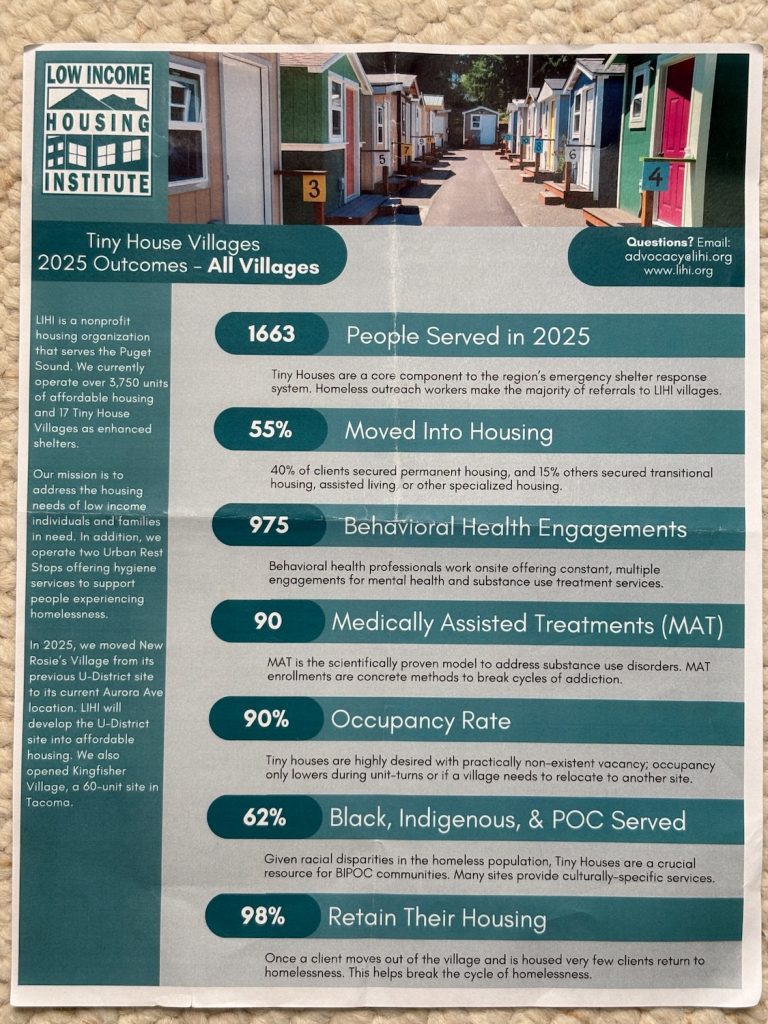
Most Desired …
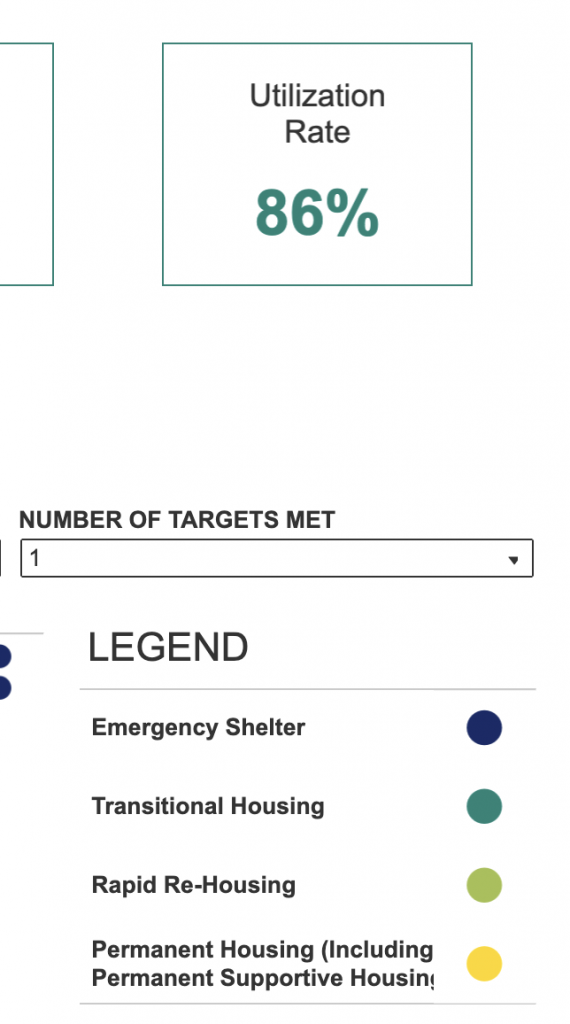
Most Successful …
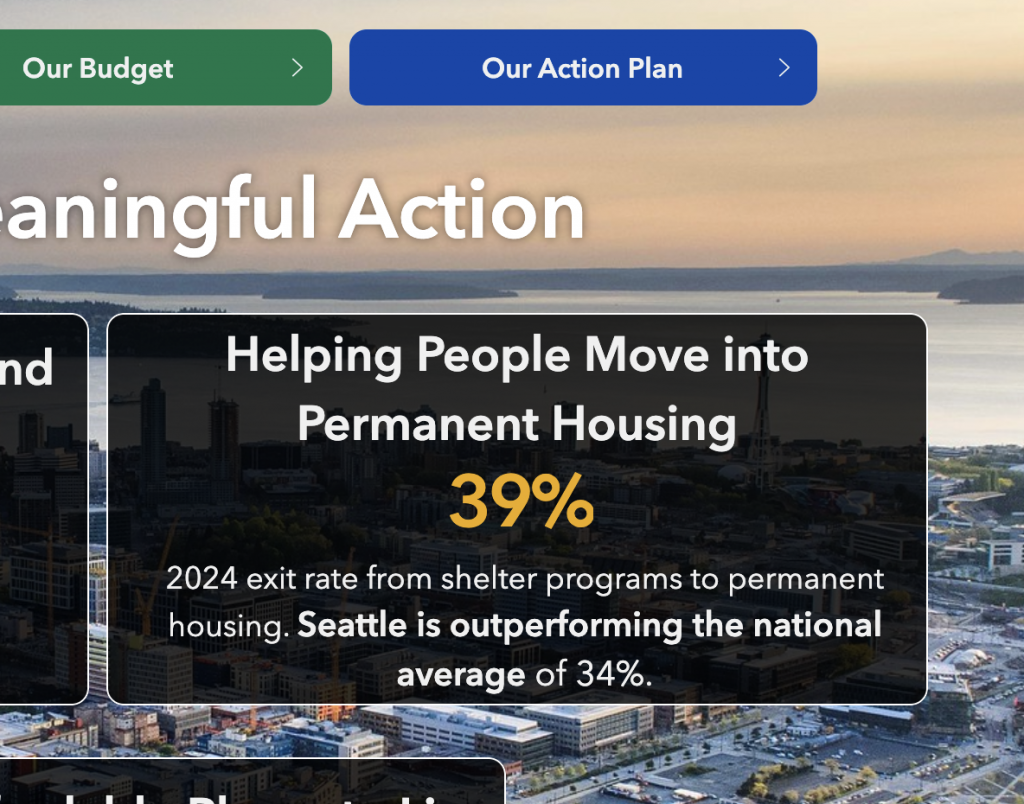
Most Affordable …
With the above data to back us up, we can confidently say that tiny homes and villages are the most desired, most effective, and most affordable alternative to tents and encampments!
Do Tiny Home Villages Allow Drug Use?

What Does a Tiny Home Village Look Like?
Are Tiny Homes Sitting Unused in Storage?
Be sure to read the August, 2025 & March, 2026 Updates, below
UPDATE: August, 2025 – the situation has improved considerably
UPDATE: March, 2026 – Finally, up to TEN more villages!

What is a tiny home for the homeless? Why do we need them?
How large are the tiny homes? Do they have heat and electricity? What about running water?


How long does it take to build a tiny home for the homeless?


How do you build your tiny homes for the homeless?

Why are tiny homes a good solution to homelessness?

streets. Non-group (or, “non-congregate”) shelter options, like tiny homes and refurbished hotels & motels, where people have their own key and a place to secure themselves and their belongings, are generally much more desired by folks who are otherwise homeless than are traditional group shelters.
Why doesn’t the city, state or federal governments pay for the tiny homes?
What are tiny home “villages”? Does Sound Foundations NW operate the tiny home villages?

How much does a tiny home cost? How does that compare with other solutions?
Do you accept donations to help build tiny homes for the homeless?


Is Sound Foundations NW an official nonprofit?

Is the Low Income Housing Institute (LIHI) involved with Sound Foundations NW?

Are there services available in tiny home villages?
Will my donation go to LIHI or to Sound Foundations NW?

Aren’t tiny homes for the homeless just glorified shacks or shantytowns?
Isn’t it cruel to force someone to live in a tiny house? Why don’t we just build more affordable housing?

I’d like to volunteer to build a tiny home for the homeless, do I need construction experience?


My company, social, church, or other group is looking for a group volunteer day. Can my group build tiny homes for the homeless?

I’d like to volunteer to build a tiny home for the homeless, can I bring my kids?

Is there hope to solve homelessness?
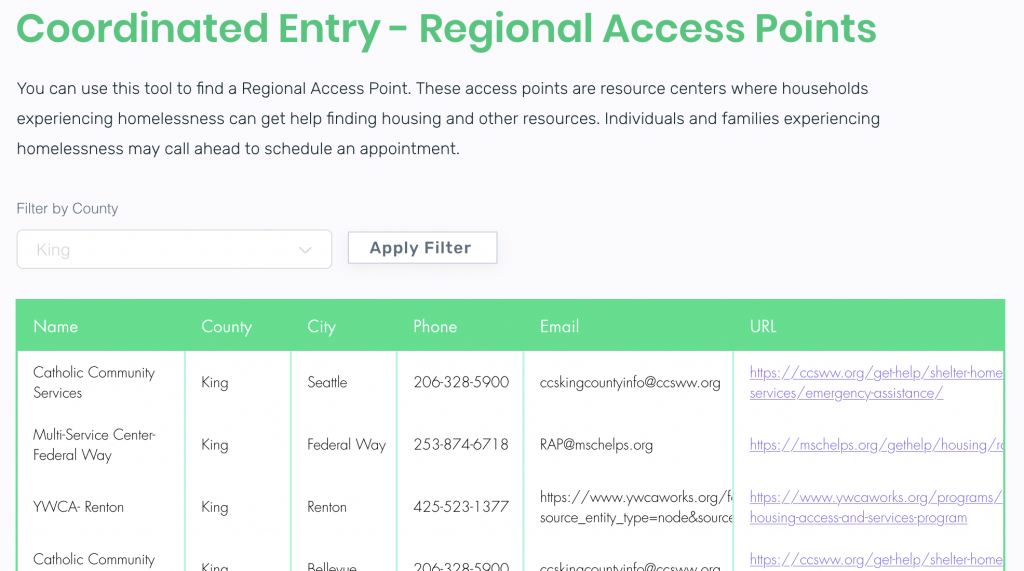
I’m homeless, how do I get a tiny home?
Is homelessness solvable?
How many tiny homes for the homeless are there in Seattle?

Have a question you don’t see the answer to? Shoot us an email and we’ll gladly send you an answer. We might even add it to this FAQ page!